
Why Monsoon Increases the Risk of Stomach Infections in Children
1. Contaminated Water Supply
Heavy rains often cause waterlogging on roads and drains. Overflowing drains can mix with nearby clean water pipes. Even a small pipe leak can let bacteria into tap water. This is one of the top reasons for stomach infections during the monsoon.
2. Slower Digestion in Humid Weather
Humidity slows down a child’s digestion process. A sluggish gut finds it harder to fight off germs. Food also takes longer to break down properly. This gives bacteria more time to cause trouble.
3. Faster Bacterial and Viral Growth in Food
Damp, warm weather speeds up bacterial growth in food. Leftovers spoil much faster than usual. Street food becomes especially risky during the rains. Germs multiply quickly in moist, humid conditions.
4. Children’s Still-Developing Immunity
Children have weaker immune systems than adults. Their digestive systems are also still maturing. This makes them fall sick faster and more severely. A mild bug in adults can turn serious in kids within hours.
Common Stomach Infections Seen in Children During Monsoon
Several infections spike during the rainy season. Here are the ones parents should watch for.
- Gastroenteritis: Often called stomach flu. Causes vomiting, diarrhoea and stomach cramps.
- Typhoid: Spreads through contaminated food and water. Brings fever, weakness and stomach pain.
- Viral diarrhoea: Very common in young children. Spreads quickly between siblings and classmates.
- Food poisoning: Comes from spoiled or undercooked food. Symptoms usually appear within hours of eating.
Each infection needs slightly different care. But all of them need quick attention from parents. Delaying treatment often makes recovery longer and harder for children.
Worried About Recurring Stomach Problems in Your Child?
Haritha Hospital offers specialised paediatric care to help identify the cause and support your child’s recovery.
How to Protect Your Child’s Digestive Health This Monsoon
Small daily habits make a real difference. Here’s what every parent can do.
Water and Hygiene
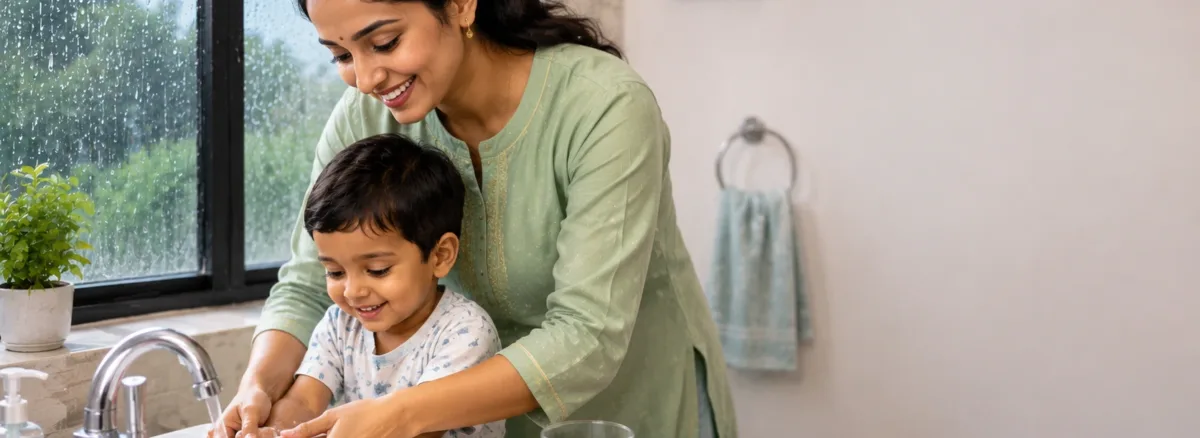
Give your child only boiled or filtered water. Teach them to wash hands before every meal. Clean hands stop most germs before they even start.
Food Safety
Avoid street food completely during the monsoon months. Serve freshly cooked meals instead of stored leftovers. Wash all fruits and vegetables thoroughly before eating.
Diet and Immunity
Choose light, home-cooked meals like khichdi and curd. Bananas and boiled rice are gentle on the stomach too. Add probiotics to help strengthen your child’s gut health. Skip oily foods and heavy dairy when your child feels unwell.
Hydration
Offer ORS the moment your child shows signs of stomach upset. Coconut water and buttermilk work well as home remedies. Keep fluids at room temperature instead of chilled. Cold drinks can upset an already sensitive stomach.
Avoid packaged juices and sugary drinks during recovery. They can worsen diarrhoea instead of helping the body heal. Small, frequent sips work better than large amounts at once.
When Should You Consult a Paediatrician?
Not every stomach infection during monsoon requires hospital treatment. However, certain symptoms should never be ignored.
Parents should seek medical attention if their child develops:
- Signs of dehydration
- Persistent or repeated vomiting
- Blood in the stool or vomit
- Severe or worsening abdominal pain
- High or persistent fever
- Very little or no urine
- Unusual sleepiness or weakness
- Difficulty drinking fluids
- Diarrhoea that continues or becomes worse
Young children can become dehydrated quickly. Timely medical evaluation can help prevent serious complications.
How Can Paediatric Gastroenterology Help Children?
Most stomach infections improve with proper hydration, nutrition, and supportive care. However, some children continue to experience digestive problems even after the initial infection settles.
Repeated vomiting, prolonged diarrhoea, recurring abdominal pain, or poor weight gain may need further evaluation. A paediatric gastroenterologist can assess these symptoms and look for possible underlying digestive concerns.
If your child’s stomach problems keep returning, specialised Paediatric Gastroenterology in Hyderabad can help provide a more focused evaluation. Haritha Hospital offers paediatric digestive care based on each child’s symptoms, age, and individual needs.
Early evaluation can be especially helpful when symptoms interfere with eating, hydration, daily activities, or healthy growth. The right care can help parents understand the problem and choose the appropriate next steps.
Final Takeaway
A Stomach Infection During Monsoon can become more common when children are exposed to unsafe water, contaminated food, and poor hygiene. Simple habits like handwashing, safe food practices, and clean drinking water can lower these risks. Parents should also watch for dehydration, persistent vomiting, severe pain, or prolonged diarrhoea. Early medical attention can help children recover safely and comfortably.
With simple precautions and the right care, parents can better protect their children during the rainy season. Haritha Hospital provides specialised paediatric care for children with digestive concerns, including persistent or recurring stomach problems. Its child-focused approach supports timely evaluation, appropriate treatment, and nutritional guidance. Because every child deserves to enjoy the monsoon with better health and peace of mind.